
Beginner Guide To Sports Betting

Sports betting looks simple from the outside: pick a winner, place a bet, cash a ticket. Then you open a sportsbook for the first time and get hit with moneylines, spreads, alternate totals, boosts, parlays, live odds, and a wall of numbers that seems designed to humble you.
I’ve found that beginners don’t usually lose because sports betting is too complicated. They lose because they start betting before they understand the pricing, the risk, and the few habits that actually matter. That’s what this guide is for.
In this beginner guide to sports betting, I’ll walk through how sportsbooks work, how to read odds and payouts, the main bet types, how to place your first wager online, and the sports betting tips for beginners that matter most in the real world. I’ll also cover things to know before betting online for readers in legal states and for those looking into offshore sportsbooks for crypto banking or broader markets. The goal isn’t to make betting look easy. It’s to make it make sense.
For readers who want a broader comparison before getting started, our guide to online sports betting sites is a useful next step.
What beginners should know first: Sports betting gets easier once you focus on odds, bankroll discipline, straight bets, and line shopping instead of trying every market on day one.
- What you’ll learn: how sportsbooks work, how to read odds, which bet types matter first, and how to place a first wager without avoidable mistakes.
- Errors to avoid: chasing losses, ignoring price, betting too many games, and sending the wrong market from the bet slip.
- Best beginner strategy: keep stakes small, use unit sizing, and compare lines before every bet.
- What to check before opening an account: state availability, verification steps, payout process, house rules, and bonus terms.
How Sports Betting Works
At its core, sports betting is just pricing uncertainty. A sportsbook posts odds on an event, and I choose whether those odds are worth betting.
If a team is heavily favored, the payout is smaller because the sportsbook believes that outcome is more likely. If a team is an underdog, the payout is bigger because the result is less likely. That basic tradeoff drives almost every market on the board.

Sportsbooks don’t simply guess. They build lines using models, market data, injury reports, public sentiment, and professional action. Then they adjust. If too much money comes in on one side, the book may move the price or the line to balance risk. Sometimes the goal is balanced action. Sometimes it’s simply to price the game efficiently enough that the built-in house edge does the rest.
A big piece of that edge is the vig, also called the juice. On a standard spread bet at -110, I have to risk $110 to win $100. That extra $10 isn’t random: it’s part of how sportsbooks make money over time.
Sportsbook Basics And How Betting Markets Are Set
A sportsbook is the platform that takes and grades bets. That can be a mobile app, a website, or a physical sportsbook. The menus will usually be organized by sport, league, and game, with a range of betting markets under each matchup.
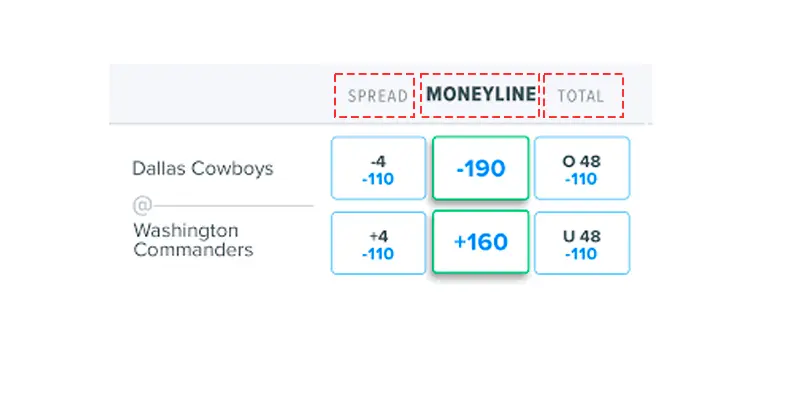
The three main markets beginners see first are:
- Moneyline: pick the team or player to win outright
- Point spread: bet on margin of victory
- Totals: bet over or under the combined score
Say the Eagles are -200 on the moneyline. That tells me they’re the favorite. If the opposing side is +180, that team is the underdog. On the spread, the Eagles might be -4.5, which means they need to win by 5 or more for that bet to cash. A total of 48.5 means I’m betting on whether both teams combine for 49 or more points, or 48 or fewer.
Books also offer derivative markets: first-half lines, team totals, player props, alternate spreads, and more. Offshore sportsbooks often go even wider here, especially with lower-profile leagues, international markets, and crypto-friendly wagering options.
What matters for a beginner is this: the number matters just as much as the pick. Betting the right team at the wrong price is still a bad bet.
Legal, Offshore, And State-Specific Access Considerations
This part matters more than many guides admit.
Since the 2018 repeal of PASPA, sports betting in the US has expanded on a state-by-state basis. That means access is not one-size-fits-all. In legal states, you’ll usually use a licensed sportsbook that verifies your age and location through geolocation tools. If you cross a state line, your access can change instantly.
In non-legal states, some bettors look to offshore sportsbooks. Others use offshore books even in legal states because they want crypto banking, faster international market coverage, fewer betting limits on niche markets, or broader props and alt lines.
I’m careful here for a reason: laws and enforcement vary, and readers should check their own state rules before opening any account. If you’re considering offshore access, due diligence matters even more than usual. Reputation, payout history, customer support, banking options, and longevity all matter. A flashy welcome bonus means nothing if a book is shaky when it’s time to withdraw.
So one of the biggest things to know before betting online is that where you live changes your options, and not every option carries the same legal protections, payment methods, or dispute process.
How To Read Odds, Lines, And Payouts
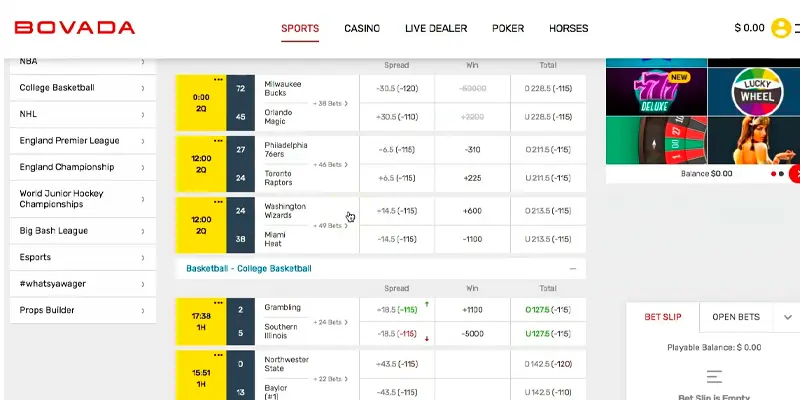
If I could only teach one skill to a beginner, it would be reading odds properly. Once you understand the price of a bet, the board stops looking like noise.
Odds and implied probability calculator
Examples: -110 = 52.38%, +160 = 38.46%.
Moneyline, Point Spread, And Totals
These are the foundations.
Moneyline is the simplest market: I’m betting on who wins.
- Eagles -200: I must risk $200 to win $100 in profit
- Giants +180: I risk $100 to win $180 in profit
Favorites carry minus odds because they’re expected to win more often. Underdogs carry plus odds because they’re less likely but pay more.
Point spread betting adds a handicap.
- Eagles -4.5 means they must win by 5 or more
- Giants +4.5 means they can lose by 4 or fewer, or win outright
This market is designed to create a more even betting choice, especially in mismatched games.
Totals, or over/under bets, focus on combined scoring.
- Over 48.5 wins if the game lands on 49 or more
- Under 48.5 wins if it lands on 48 or fewer
Beginners often think they’re just betting their sports opinion. Really, they’re betting their opinion versus the line. That’s a huge difference. I might think a team is better, but if the market already prices that advantage correctly, there may be no value.
| Bet type | What it means | Best beginner use |
|---|---|---|
| Moneyline | Pick the team or player to win outright | The simplest starting point |
| Point spread | Bet on margin of victory | Useful once you understand key numbers |
| Totals | Bet over or under the combined score | Useful when you follow pace, weather, or game style |
American Odds, Implied Probability, And The Vig
American odds tell me both payout and market expectation.
For plus odds, the number shows how much profit I’d make on a $100 bet.
- +200 = risk $100 to win $200
For minus odds, the number shows how much I need to risk to win $100.
- -200 = risk $200 to win $100
The hidden lesson is probability.
Every price implies a break-even point. That’s the win rate I need long term just to avoid losing money.
A simple way to think about it:
- For minus odds: implied probability = risk / (risk + profit)
- For plus odds: implied probability = risk / (risk + profit) using a $100 base stake
Examples:
- -200 implies about 66.7%
- +200 implies about 33.3%
- -110 implies about 52.4%
That last one is why the vig matters so much. On a standard two-way market priced at -110 / -110, the total implied probability is above 100%. That extra percentage is the sportsbook’s edge.
This is one reason casual bettors struggle. They can pick winners at a decent rate and still lose because the pricing is working against them.
Here’s the quick math on payouts:
- Plus odds: profit = wager × (odds / 100)
- Minus odds: profit = wager × (100 / absolute value of odds)
So:
- $50 at +150 returns $75 profit
- $55 at -110 returns $50 profit
Early on, I cared too much about picking the winner and not enough about the number. That is how bettors can be right on the game and still be wrong on the bet.
Once I started viewing odds as prices instead of decorations, my betting decisions got sharper fast. That’s the mindset shift beginners need.
The Main Types Of Bets Beginners Should Know
Most new bettors start with basic markets, then get tempted by bigger payouts. That’s normal. The trick is understanding what each bet type does to your risk.
Straight Bets, Parlays, Teasers, And Round Robins
A straight bet is one pick on one market: a side, total, or moneyline. For beginners, this is where I’d spend most of my time. It’s the cleanest way to learn pricing, line movement, and bankroll management.
A parlay combines multiple picks into one ticket. Every leg must win for the whole bet to cash. The appeal is obvious: smaller stake, much bigger payout. The downside is just as obvious: one miss kills the ticket.
Parlays aren’t evil. They’re just harder to beat consistently because every added leg increases variance and usually increases the hold for the sportsbook.
A teaser is mostly used in football and basketball. It lets me move the spread or total in my favor by a set number of points, but the payout drops. For example, I might turn a -7.5 favorite into -1.5, or a total of 47.5 into 53.5 on an under. The better number is nice, but I’m paying for it.
A round robin is a series of smaller parlays built from a group of selections. If I choose four teams, a round robin can create combinations of two-team or three-team parlays. This lowers the all-or-nothing pain of a full parlay, but it also increases total stake and can get confusing fast.
For beginners, my advice is simple:
- Learn with straight bets first
- Treat parlays as entertainment, not a core strategy
- Don’t use teasers unless you understand key numbers and pricing
- Avoid round robins until you’re comfortable tracking multiple outcomes
Props, Same-Game Parlays, And Live Betting
Prop bets focus on specific events rather than final outcomes. That could be a quarterback’s passing yards, an NBA player’s rebounds, or whether a baseball pitcher records 7+ strikeouts.
Props can be softer than main markets because they’re more specialized. But they also attract overconfident bettors who are betting headlines instead of numbers. If a player is “due,” the market probably knows the same story you do.
Same-game parlays combine multiple bets from one event, like a team moneyline, a player touchdown prop, and the over. They’re popular because they’re fun and easy to build. They’re also usually very profitable for sportsbooks. Correlation, pricing complexity, and convenience all tend to work in the book’s favor.
Live betting means betting after the game starts. Odds update in real time based on score, clock, injuries, momentum, and market reaction. Done well, it can be useful. Done carelessly, it becomes speed-clicking with money.
I like live betting only when I know exactly what I’m looking for, such as:
- pace changes that the market may be slow to price
- foul trouble in basketball
- weather shifts in football or baseball
- injury news before the number fully settles
Beginners should remember that fast markets punish hesitation and emotion. If you’re betting live because you’re bored or trying to rescue a losing day, that’s usually a bad sign.
How To Place Your First Bet Online
Actually placing a bet online is easy. Placing one intelligently takes a little more care.
Choosing A Sportsbook, Funding Your Account, And Cashing Out
Start with the sportsbook itself. If you’re in a legal state, that usually means choosing a licensed operator available where you are. If you’re looking at offshore sportsbooks, I’d focus on trust before bonuses: payout reputation, account verification standards, customer service responsiveness, market depth, and banking reliability.
Then compare practical details:
- betting limits
- odds quality
- range of sports and props
- crypto availability
- withdrawal speed
- bonus terms and rollover requirements
Once you choose a book, you’ll create an account and verify your identity. In legal markets, geolocation is standard, so the app may require location permissions. Offshore books may have different onboarding steps, especially if they support crypto-first deposits.
Funding options typically include:
- debit card
- bank transfer or ACH
- e-wallets, depending on the book
- prepaid methods
- cryptocurrencies at some offshore sportsbooks
After funding, add your selection to the bet slip, enter the stake amount, review the projected payout, and confirm the bet. Always read the ticket before you submit it. A surprisingly high number of beginner mistakes happen right there: wrong market, wrong team, wrong stake, accidental parlay.
A common beginner slip mistake looks like this: the bettor means to place Knicks moneyline for $20, taps a same-game parlay tab by mistake, and ends up submitting Knicks moneyline plus over 221.5 at a very different price. That is why I read the market name, stake, and projected payout line by line before I hit confirm.
Cashing out is where sportsbook quality really shows. Some books process withdrawals smoothly. Others suddenly become “very thorough” once you win. Make sure your account is fully verified early, not after you request a payout.
Things To Know Before Betting Online
There are a few things to know before betting online that can save you money and frustration.
Before you bet online, check these first:
- Confirm sports betting is available where you are
- Read account verification and location requirements
- Check deposit, withdrawal, and payout timing
- Read house rules and bonus terms
- Set a deposit cap before funding the account
First, read the rules. House rules cover grading policies, canceled games, player prop void conditions, payout disputes, and how regulated operators disclose charges such as vigorish. They’re boring until they matter, and then they matter a lot.
Second, understand bonuses before claiming them. A big signup offer may come with playthrough requirements, odds restrictions, expiration dates, or limits on how bonus funds convert to withdrawable cash.
Third, set a budget before your first deposit. I’d decide that number when I’m calm, not when a prime-time game is ten minutes away.
Fourth, use security basics:
- strong unique password
- two-factor authentication if available
- verified payment methods only
- no public Wi-Fi for account access
And fifth, know the emotional trap of convenience. Online sportsbooks make it incredibly easy to bet again, and again, and once more because “this one feels good.” That ease is great for access and terrible for impulse control unless you’re disciplined.
Choosing A Sports Betting Strategy
A strategy doesn’t need to be fancy. In fact, beginner bettors usually do better with fewer moving parts.
Choosing a sports betting strategy means deciding how I’ll manage money, what sports I’ll focus on, how I’ll compare prices, and what kind of edge I realistically think I have. If I skip that and just bet whatever is on TV, I’m not really betting with a strategy. I’m donating with extra steps.
Bankroll Management, Unit Sizing, And Record Keeping
This is the least glamorous part of sports betting, and the most important.
My bankroll is the amount of money set aside specifically for betting. Not rent money. Not emergency savings. Not the credit card balance I promise myself I’ll clean up later.
From there, I use units. A unit is a standard bet size, usually 1% to 5% of bankroll, though most true beginners should stay on the lower end. If my bankroll is $500, a 1% unit is $5. That may not feel exciting, but that’s kind of the point. Small unit sizing keeps variance from wrecking me.
A simple beginner framework:
- 1 unit for standard bets
- 0.5 unit for riskier opinions or props
- avoid jumping to 3 or 5 units because something feels like a lock
There are no locks. Only bets you’ll later wish you sized smaller.
Record keeping matters too. I track:
- date
- sport and market
- odds taken
- stake size
- result
- closing line, if possible
- a short note on why I made the bet
That last part helps expose patterns. Maybe I’m good at NFL totals but terrible at player props. Maybe I do well pregame and badly in live betting. Without records, it’s all vibes and selective memory.
After tracking my first 100 bets, I stopped trusting my memory and started trusting the log. It showed me where I was actually adding value and where I was just giving money back.
Sample bankroll tracking template:
| Date | Sport / Market | Pick | Odds | Stake | Result | Closing line | Note |
|---|---|---|---|---|---|---|---|
| 09/14 | NFL moneyline | Eagles | -118 | 1 unit | Win | -130 | Beat the closing number |
| 09/15 | MLB total | Over 8.5 | -105 | 1 unit | Loss | 8 | Weather moved late |
Line Shopping And Picking Sports You Can Follow Closely
Line shopping is one of the simplest edges available to ordinary bettors. It means comparing odds across multiple sportsbooks before placing a bet.
This sounds small, but small pricing differences add up.
If one book has -3 (-110) and another has -2.5 (-115), those are not the same bet. If one sportsbook offers +145 and another offers +160, taking the better number improves long-term results even if both picks lose tonight. Over hundreds of bets, line shopping can be the difference between break-even and profitable.
That difference is not cosmetic. On a $100 stake, +145 returns $145 in profit while +160 returns $160. Same opinion, $15 more if the bet wins.
One mistake I made early was taking the first decent number on the screen instead of checking whether another book had a better price. The handicap might be right, the team might win, and the bet can still be badly priced.
| Same pick | Worse line | Better line | Why it matters |
|---|---|---|---|
| Underdog moneyline | +145 | +160 | A $100 stake returns $15 more in profit at +160 |
| Favorite spread | -3 (-110) | -2.5 (-115) | The better number can matter more than the slightly worse price |
This is especially relevant for readers comparing legal books with offshore sportsbooks. Offshore sites sometimes offer broader markets and strong crypto banking, while legal books may offer better protections and promotions. The right choice often depends on what I value most: pricing, market depth, payment flexibility, or regulatory oversight.
I also strongly prefer betting sports I can follow closely. Not necessarily sports I love casually, sports I can actually track with context.
That means knowing:
- injury impact beyond the headline names
- scheduling spots and travel fatigue
- coaching tendencies
- lineup changes
- weather, tempo, and style matchups
A beginner who specializes in one or two sports usually has a better shot than someone firing random bets across every board available. More action feels productive. It usually isn’t.
Sports Betting Tips For Beginners
Most sports betting tips for beginners boil down to one idea: protect yourself from bad information and bad habits. The sports betting world is full of both.
How To Spot Reliable Betting Advice
The fastest way to get misled is to follow people who sell certainty.
If someone promises guaranteed winners, “locks,” or can’t-miss picks, I move on. Good betting analysis sounds like probability, not prophecy.
When I’m deciding how to spot reliable betting advice, I look for a few things:
- Reasoning over hype: Are they explaining matchup edges, price sensitivity, injuries, and market context?
- Transparency: Do they track results publicly, including losses?
- Number awareness: Do they mention the exact line and price, or just say “take Team X” after the number moved?
- Discipline: Are they selective, or posting 20 picks a day for engagement?
- No miracle language: Serious bettors don’t talk like late-night infomercials.
I also trust advice more when it acknowledges uncertainty. A capper saying, “I like this at +4, but not at +2.5,” is usually more credible than someone shouting confidence with no price context.
Reliable betting advice should help me think better, not outsource my judgment completely.
Avoiding Common Betting Mistakes
Avoiding common betting mistakes is where beginners save the most money.
The big ones:
Chasing losses.
After a rough beat, the urge to win it back quickly is strong. That’s how small losing days become ugly ones. I’d rather end a bad session than start making emotional bets.
Ignoring the vig.
A lot of beginners focus only on who they think will win. But if I’m constantly laying bad prices, I can be right often and still lose long term.
Betting too many games.
Volume can create the illusion of control. Usually it just creates more exposure to bad numbers.
Overusing parlays.
One small parlay for fun is one thing. Building my whole betting approach around longshot payouts is another.
Betting under the influence.
It sounds obvious, but not enough people follow it. Alcohol and live betting are a brutal combination.
Confusing fandom with analysis.
If I’m emotionally tied to a team, my judgment usually gets worse, not better.
Failing to shop for lines.
This is one of the most fixable leaks in beginner betting.
Trusting social media “insiders.”
A screenshot of a winning slip is not evidence of long-term skill. It’s marketing.
The best beginner habit is boring on purpose: bet smaller, bet fewer games, and stay patient. There’s no prize for having the most action on a Tuesday night.
Conclusion
Sports betting gets easier once I stop treating it like a shortcut to easy money and start treating it like what it is: a priced market with entertainment value, real risk, and a steep penalty for impatience.
If you’re just starting out, focus on the fundamentals. Learn how odds work. Stick to straight bets at first. Use bankroll discipline. Shop for the best number. And be brutally honest about whether you’re making a researched bet or just reaching for action.
For readers comparing legal books with offshore sportsbooks, the same rule applies everywhere: choose access carefully, understand the rules, and prioritize reliability over flashy promos. Broad markets and crypto banking can be appealing, but trust and payout reputation matter more.
A beginner guide to sports betting should leave you with one useful mindset: you do not need to bet a lot to bet well. Start small, learn fast, and keep your mistakes cheap.
Frequently Asked Questions About Beginner Sports Betting
What is sports betting, and how do sportsbooks make money?
Sports betting is the practice of wagering on the outcome of a game or event at posted odds. Sportsbooks make money by building a margin into those odds, called the vig or juice. For example, at -110, you risk $110 to win $100, with the extra amount helping create the house edge.
How do sports betting odds work?
Odds do two jobs at once: they show the payout and they imply how likely the sportsbook thinks an outcome is. Bigger underdog prices pay more because they are less likely to win, while stronger favorites pay less because they are expected to win more often. Once I read odds as prices instead of just labels, the board makes a lot more sense.
What do +200 and -200 mean in betting?
Plus odds show how much profit you win on a $100 stake, so +200 means a $100 bet wins $200. Minus odds show how much you must risk to win $100, so -200 means you need to risk $200 to win $100. The plus sign points to the underdog side, while the minus sign points to the favorite.
What’s the safest bet type for beginners?
Straight bets are usually the safest place to start because they are simpler to track and easier to price correctly. Moneyline, spread, and total bets teach the basics without the extra variance that comes with parlays or same-game parlays. For most beginners, that is the cleanest way to learn.
How do I place my first bet online?
Choose a sportsbook that is available where you are, create an account, complete verification, fund the account, and add your pick to the bet slip. Before you confirm, reread the market, the stake, and the projected payout. A lot of beginner mistakes happen in the last ten seconds before submission.
What is a good beginner betting strategy?
A good beginner strategy is usually simple: bet small, use unit sizing, focus on straight bets, and compare prices across books before every wager. Tracking results matters too, because it shows whether you are actually making good decisions or just remembering the wins.
Can I use an offshore sportsbook if betting is not legal in my state?
Some bettors do use offshore sportsbooks for broader markets or crypto banking, but access, legality, and consumer protections vary by state. That means you should check your local laws carefully before signing up. If you consider an offshore book, prioritize reputation, payout history, customer support, and banking reliability over flashy bonuses.